
LEAD WITH VULNERABILITY
- Cody Rininger
- Apr 1
- 4 min read

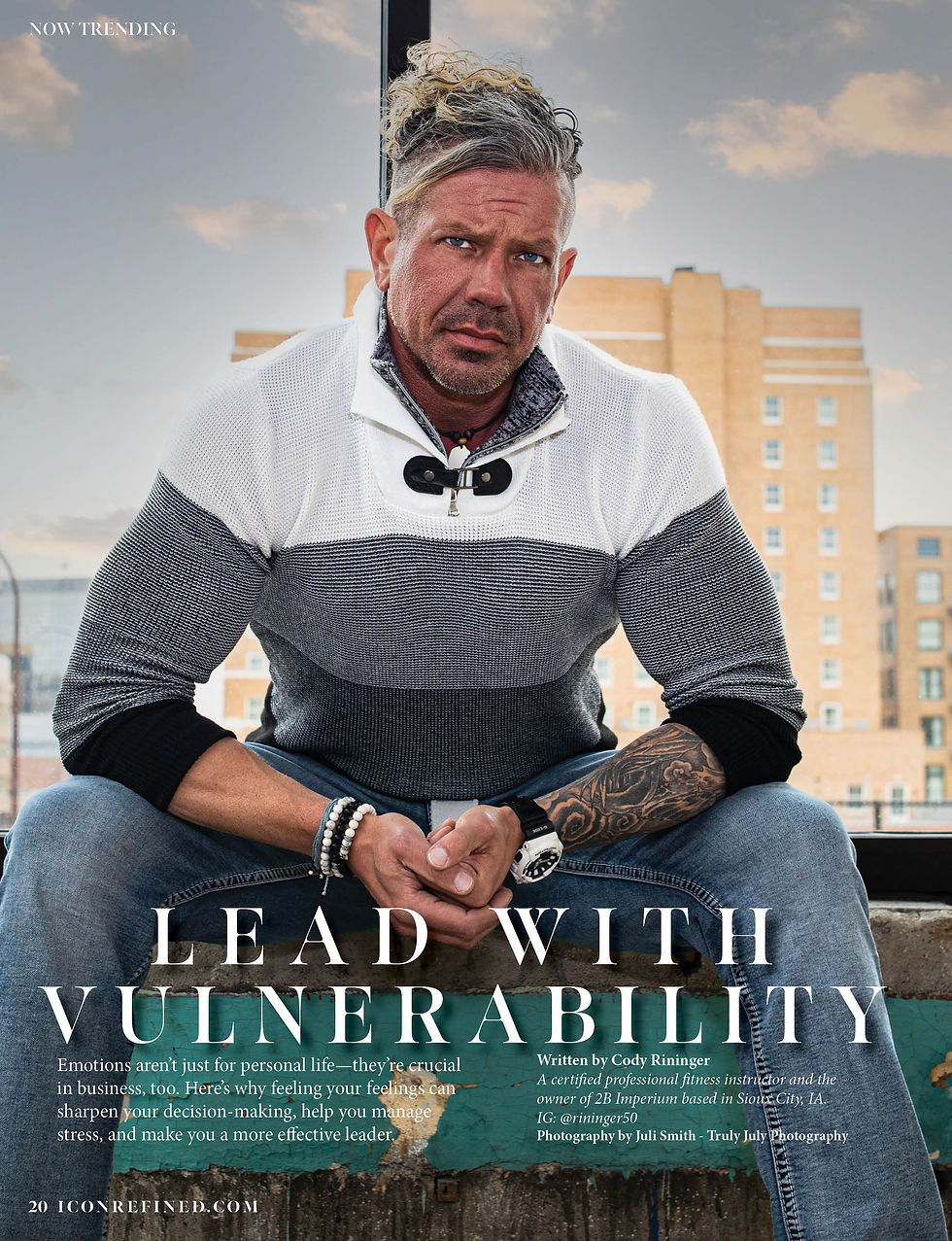

“By allowing ourselves to fully engage with our emotions, we improve our mental and physical health. We also become more effective leaders, able to manage stress, make better decisions, and connect with others on a deeper level.”
From a young age, boys are often told to “man up” or that “boys don’t cry.” These messages create an environment where emotional expression is seen as a weakness rather than a strength. Women have traditionally been given more social permission to express emotions openly, particularly when it comes to vulnerability and sadness. Men, on the other hand, have often been encouraged to express emotions like anger or pride. Understanding these differences can help us create a more balanced emotional landscape, not only in personal relationships but in our professional lives as well.
As entrepreneurs, the pressures we face can be immense, and often, society expects us to carry them alone. For generations, the idealized image of the “strong, silent type” has encouraged men to bottle up their emotions, suppressing any feelings of sadness, frustration, or fear. While it may seem like an act of strength, this emotional suppression can lead to severe mental health issues, including depression, anxiety, and substance abuse. Left unchecked, these suppressed emotions don’t disappear—they often manifest in other, less healthy ways.
For entrepreneurs, especially, emotional intelligence is increasingly recognized as a key leadership skill. Men who are out of touch with their feelings may struggle with stress management, conflict resolution, and effective decision-making. In fact, leaders who embrace emotional expression tend to build more meaningful relationships with clients, employees, and partners. Personally, emotional intelligence has become the strongest part of my approach to leadership. But this wasn’t always the case.
I grew up working with my dad and grandfather on our family farm, where emotional expression was neither taught nor expected. We worked hard, kept our heads down, and never talked about how we felt. But as I grew older, I realized there was a deeper, more nuanced side to emotions that needed recognition and understanding.
One of the most powerful symbols of male emotional expression is crying. For far too long, society has viewed men crying as a sign of weakness. I vividly remember the first time I saw my dad cry. Our family was going through a difficult time, and my dad, usually stoic and reserved, came to me, got down on one knee, and asked if I was okay. “Why are you crying, Dad?” I asked. He explained, “Sometimes, I have so much in my tummy and heart, it doesn’t know where to go. So, I cry because I cannot do anything else. It’s okay to do that, because after, I’ll make it all okay.”
This was a pivotal moment for me. The idea that vulnerability could be a source of strength was new, yet transformative. This was the emotional foundation I needed to pass on to my own children—two daughters and two sons. Tears are not a weakness. They are a natural and healthy way to release emotions. Men who allow themselves to cry often report feeling stronger and more balanced as a result.
However, emotional expression isn’t limited to tears. For some men, emotions are better released through art, physical activity, or deep, meaningful conversations. There’s no one-size-fits-all approach, and all healthy forms of emotional expression should be encouraged and celebrated. This understanding has been vital to my own life, particularly when I struggled through a period of severe emotional turmoil thirteen years ago. I tried therapy, but it didn’t seem to help; the judgment I felt only deepened my sense of isolation. Likewise, substance abuse and relationships were temporary distractions that didn’t offer real relief.
The one therapeutic outlet that helped me find peace and rebuild my emotional health was the gym. Lifting became my therapy, a place where I could release anger, sadness, and frustration in a safe, non-judgmental space. One day, during a particularly intense deadlifting session, I found myself crying in the gym. That moment marked a turning point in my emotional journey.
For many men, seeking professional help, such as therapy or counseling, can be a game-changer. A skilled therapist provides a safe, supportive environment to explore emotions and develop healthy coping mechanisms. It’s important to recognize that seeking help isn’t a sign of weakness—it’s a sign of strength.
As I reflect on my own experiences, it’s clear that embracing emotional expression brings numerous benefits—especially in the world of entrepreneurship. By allowing ourselves to fully engage with our emotions, we improve our mental and physical health. We also become more effective leaders, able to manage stress, make better decisions, and connect with others on a deeper level. When men feel free to express their emotions, the impact extends beyond their personal lives, contributing to more meaningful relationships and a healthier workplace.
But not everyone has access to therapy or support networks. For many men, the journey begins with themselves. It’s crucial to start by acknowledging and accepting your emotions. Whether through journaling, exercise, or simply giving yourself space to breathe and reflect, emotional expression is essential for your well-being.
As entrepreneurs, we know that growth isn’t just about business success—it’s also about personal development. By embracing vulnerability, emotional intelligence, and mental health awareness, we can lead more authentic lives, be better leaders, and foster deeper connections with those around us. At the end of the day, you have to be you. And being emotionally whole is the key to thriving in every aspect of life.


Comments